Showing posts with label graphic design. Show all posts

February 18, 2010

Soviet-style covers for histories of Communism

Eye blog » Indian ‘ostalgia’? Soviet-style covers for Seagull Books’ histories of Communism: "

16th February, 2010

11:03 pm


Indian ‘ostalgia’?
Soviet-style covers for Seagull Books’ histories of Communism

Published on Tuesday, 16 February, 2010 | 2:02 pm

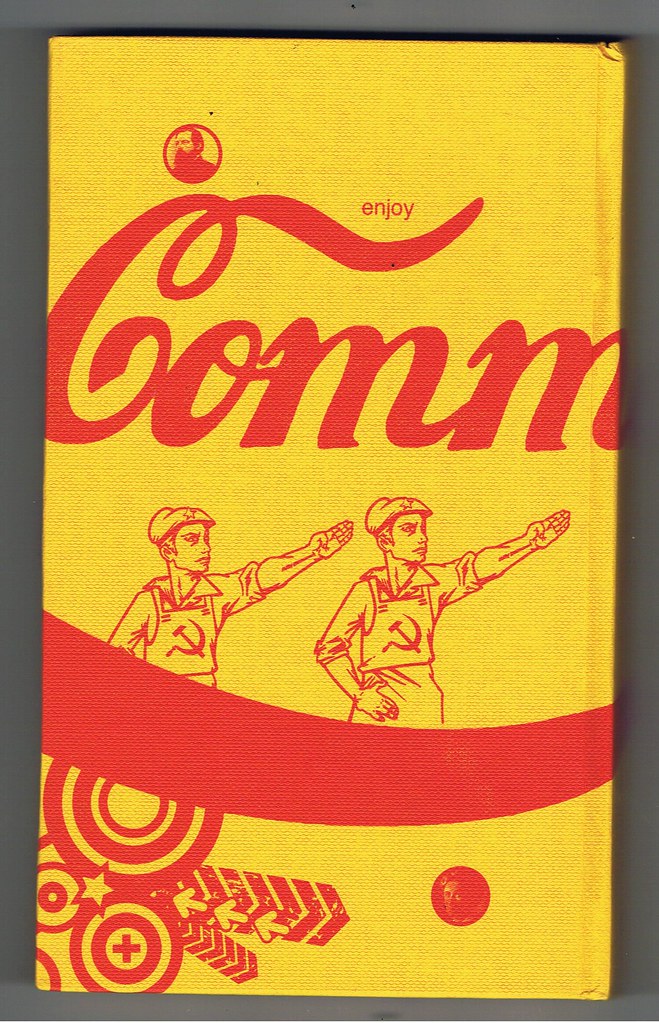
‘What Was Communism?’ is a series of short, snappy monographs, published by Seagull Books and edited by Tariq Ali (who also wrote one of them), writes Fíacha O Dúbhda. They are hardbacks, printed on high quality paper with tasteful lettering, with vivid and distinctive covers designed by Sunandini Banerjee, one of Seagull’s editors. In short, they are attractive and appealing commodities.

communism 1

We are a long way here from the simple utilitarian publications so frequently associated with Communism: printed on the cheapest of paper and covers blank apart from lettering, designed to be handed out for nominal fees at factory doors and public assemblies. Yet the spirit of this history is still intact in these works; Seagull sells the works in India at highly subsidised rates (350 rupees or less than £5 each), making them available to the under-waged of the developing world.

communism 2

The covers radiate nostalgia for the aesthetic of Soviet graphic culture – from matryoshka dolls and bombs to Red Army soldiers and fiery liberated working women. In the style of montage pioneered by Vertov and Eisenstein, the new is laid atop the old and thus both are transformed through a dialectic of image. Bubbly contemporary graphics are melded with iconography, rejuvenating and realigning our perspectives on the images of the past.

communism 4

For many years leftists of all persuasions have attempted to salvage Marxist ideology from the aborted Soviet experiment, highlighting its departures from early Communist intent. Yet here we have a blatant referencing of Soviet visual culture, albeit infused with a contemporary and fashionable retro twist. As Banerjee puts it, the vectors – line drawings – are a modern, hip element, for a series taking a new, contemporary look at an ideology that may not be around very much longer.

communism 3

Do these covers serve to embed bias, irrevocably placing the equation of Communism with Stalinist society in the mind of the bookshop browser? Do they narrow rather than broaden the target audience? Do they embody a fatalism; that ideology cannot be salvaged from history?

We can only ask whether the best way to promote such literature is to plug it into a past it is trying to shrug off. Would the cause not be better served by opening up a fresh arena of possibility through new and daring visual culture, employing the principles of montage in innovative and breathtaking ways?

communism 6

The ‘What Was Communism?’ series is available from Seagull Books

Eye, the international review of graphic design, is a quarterly journal you can read like a magazine and collect like a book. It’s available from all good design bookshops and at the online Eye shop, where you can order subscriptions, single issues and classic collections of themed back issues.


Share/Save/Bookmark

December 9, 2009

"Punk’ Era of Graphic Design

Emigre Compilation Revisits ‘Punk’ Era of Graphic Design | Underwire | Wired.com: "

Emigre Compilation Revisits ‘Punk’ Era of Graphic Design

emigre-composite-a-1200
A woman took the stage of a Seattle design conference in 1995 and smashed a computer to smithereens with a sledgehammer. Passions were raging full-boil during the so-called legibility wars, as tradition-based graphic designers — in love with clean, simple advertising and magazine layouts — looked with horror at a new generation of font designers and illustrators who used computer programs as a tool for shredding, shattering, melting and otherwise rethinking the way words and pictures came together to sell a message.
On hand to report on the fracas was Émigré magazine. Over the course of 69 issues that now reside in New York City’s Museum of Modern Art, the magazine championed experimentalists and routinely got lambasted by the old guard for advocating “the cult of ugly.”
Émigré No. 70: The Look Back Issue hits bookstores Saturday. Weighing in at nearly 6 pounds, the 512-page volume costs $50 and comes bundled with a booklet of fiery letters to the editors, a CD-ROM with music and videos published by Émigré and a commemorative poster.
The book, edited by Émigré co-founder and designer Rudy VanderLans and published by Gingko Press, features all the eye-popping magazine covers (including those pictured above and below), plus essays and interviews from The Designers Republic, Allen Hori, Rick Valicenti, Vaughan Oliver, Mr. Keedy, Lorraine Wild and others.
VanderLans likens the late 20th century’s computer-inspired design movement to “punk music in the ’70s and ’80s.”

“Punk was a direct reaction to glam/stadium rock (Bowie/Roxie Music, etc.),” he told Wired.com in an e-mail interview. “Did it change music? Not really. Glam rock is still being made. But punk added something to the mix. It expanded our idea of what music was, and how it could be recorded, performed and distributed. I think that’s the legacy of design of the ’90s. We reacted to an institutionalized Modernism that had gone stale.”
VanderLans talks about DIY design, the punk-rock aesthetic and the game-changing Apple Macintosh in the interview below.
emigre-composite-1346-b


read the rest of the interview at Emigre Compilation Revisits ‘Punk’ Era of Graphic Design | Underwire | Wired.com:

Share/Save/Bookmark

October 27, 2009

Symbiosis by Jelte van Abbema

Dezeen » Blog Archive » Symbiosis by Jelte van Abbema: "
Dezeen architecture and design magazine

October 27th, 2009
dzn_sq_ABOVE=BELOW_17
Dutch Design Week: Dutch designer Jelte van Abbema won the €10,000 Rado Prize at the Dutch Design Awards last week for a body of work including Symbiosis, an experimental project that involved printing with bacteria.
dzn_SYMBIOSIS_research_08
Van Abbema printed on paper (top) and billboards (below), creating simple typographic forms that changed colour and form as the bacteria multiplied and then died.
dzn_sq_abri_bac_buiten
The Rado Prize, sponsored by watch brand Rado, is awarded each year for innovative, topical work by a young Dutch designer.
dzn_SYMBIOSIS_research_01
See our earlier story on the overall winner of the Dutch Design Awards, Merry-go-round Coat Rack by Studio Wieke Somers, and best consumer product winner FlexVaas by Vij5.
dzn_ABOVE=BELOW_07
Here’s some info about Symbiosis from van Abbema, followed by his biography and info about the Rado Prize:

Symbiosis
Printed media puts a pressure on our environment. Solutions like soya ink or natural pigments are a way in the good directions, but Jelte van Abbema tried to take it a bit further. Floated curiosity to a new approach and a fascination for growth, he investigated the possibilities of bacteria in visual culture. To cause no epidemic he followed a course at the department microbiology of the university Wageningen.
dzn_SYMBIOSIS_research_03
It’s revolutionary approach: printed-paper does not need to be finished when it rolls of the press. After a period of research he pressed with carefully composed bacteria text on posters. In a converted poster box of JCDecaux – in fact a huge Petri dish – he created the correct humidity and warmth to let the print grow.
dzn_SYMBIOSIS_book-+-research
A new manner to publicly captivate without changing poster each week. Time gets barral at the work and transforms the image to something new. The bacteria act and create their own aesthetically induced dimension.

Winner Rado Young Designer Award 2009 – Jelte van Abbema
Jelte van Abbema was born in 1982 in Voorburg, the Netherlands. He grew up in the Dutch town of Wageningen, which is known for the life sciences and peacemaking. As a young gardener, he learned about the strangeness and beauty of nature, and with this he found the tools necessary to grow. Upon graduating high school in 2000, he began his studies at the Design Academy Eindhoven in Man & Communication. In June 2006, he graduated cum laude. His work was nominated for the René Smeets and Melkweg Design Awards and received the Willie Wortel Award for invention.
dzn_ABOVE=BELOW_30
In 2007, he founded Lab van Abbema to investigate how design, science and technology can combine to shape a new landscape that reflects the contemporary nature of our world. His ongoing search for making the unfamiliar familiar has resulted in numerous collaborations, and his work has been exhibited and published internationally.

RADO YOUNG DESIGNER AWARD
Winner: Jelte van Abbema “A promising marriage between art and science, based on in-depth research. This technical invention creates new images and forms.”
dzn_ABOVE=BELOW_17
RADO YOUNG DESIGNER AWARD
Graduates are hereby invited to sign up for the Rado Young Designer Award, the Dutch Design Awards’ incentive award for young, talented designers.
The international jury appoints the Rado Young Designer 2009 from three nominations selected from all entries by a special Rado selection committee. On Saturday 17 October, this winner will step into the spotlight on the most distinguished Dutch platform for design excellence.
dzn_jelte_van_abbema_abri_bac_buiten
Finalists 2009
Designers from very different disciplines, but all three young and bursting with talent. Below a brief description of the three finalists for the Rado Young Designer Award, the DDA stimulus prize.
Atelier NL
Graduated from the Design Academy Eindhoven in 2006, now design studio Atelier NL. Nadine Sterk and Lonny van Ryswyck already worked for, amongst others, Royal Tichelaar Makkum. Atelier NL shows that research is an essential part of the design process.
Jelte van Abbema
His work was previously nominated for, amongst others, the René Smeets and Melkweg Design Awards. In 2007, Lab van Abbema was established. He employs other disciplines in his work (science, computer technology, biochemistry) from which his designs are borne. His work has been exhibited both nationally and internationally.
Mattijs van Bergen
Mattijs designs in the playing field between fashion and graphic design. He has an original and recognisable signature, which – despite the high fashion content – sounds a note with the public at large. He graduated from the ArtEZ Institute in Arnhem and obtained a Master’s in Women’s Wear from Central Saint Martins in London. Mattijs has worked for Viktor & Rolf’s studios, has already produced a number of ready-to-wear collections, and his name is gaining increasing international attention.
THE AWARD
First of all, of course, it is an honour to be the Rado Young Designer for one whole year. The winner receives 10,000 Euros in cash as well as support from Rado with regard to PR and communication, for example in the form of a press conference, articles in design magazines, and so on.
The winner will furthermore be honoured on the stage in the presence of around 1,100 guests during the celebratory Award Show of the Dutch Design Awards. The winner’s work will be included in the one-week DDA exhibition during the Dutch Design Week in the Brainport Greenhouse and highlighted in the DDA catalogue.
CRITERIA
The Rado selection committee judges entries on the following criteria:
  • individual style with a distinctive vision and expressive idiom taking shape
  • responding to topicality
  • active for 5 years at the most (no students)
  • versatility i.e. talented in various forms of expression
  • recognised as a talent by his/her peers
  • inventor and team player
  • living and working in the Netherlands


Posted by Marcus Fairs
Email thisSubscribe to this feedDigg This!Stumble It!
"
Share/Save/Bookmark

September 26, 2009

Interview with Jonathan Ball

Existing Visual » Interview with Jonathan Ball: "
DesignIllustrationArtMotionInteractiveProductTypographyPhotoArchitecture

Interview with Jonathan Ball

Tags / — Vectortuts+ @ 7:27 am
Meet Jonathan Ball from Cardiff, UK. Jonathan’s works as a designer, illustrator, and has immersed himself in numerous other creative spheres. He creates distinctively stylized work that is often infused with quirky characters.

In this interview, he talks about his design and illustration work. Learn about how he’s grown professionally, his passion for drawing and character design, his process in working with high-profile companies, and what his goals for future growth are. Let’s have a chat with Jonathan!

1. Hello Jonathan, please tell us a bit about yourself, where you’re from, your training, and how you got started in the field? How long have you been illustrating and designing?

Born 1974 , Cardiff, UK. although I always liked drawing but it wasn’t until I studied graphic design at the age of 29 that I realized it was illustration that was my main passion. So I have only been working as an illustrator for around 4 years.

2. I notice numerous cute-quirky characters in your portfolio on Behance? Could you tell us a bit about your illustration style? How did it develop? What are the major influences for this work?

Quite a few influences in there from pop culture, such as video games and cartoons, as well as being influenced by fine artists such as Phil Hale, Lucian Freud and Japanese illustration. The characters reflect the quirkiness of human nature. Growing up in an inner city area exposes you to a large cross section of human kind, and has probably greatly influenced my work.

3. What are the range of programs you work with? Where do vector graphics fit into your workflow? How often do you blend various styles of graphics together, like mixing 3D and vector, or adding texture to vector, and do you use Photoshop to combine these elements?

I started using Freehand MX, but them reluctantly moved on to illustrator. I found Illustrator quite frustrating for a while as Freehand offered greater control over drawing and selecting points, but now illustrator has improved, plus I’ve just improved my skills. I usually create a page of elements in illustrator and then bring them into photoshop to play with and compose into an illustration. Although much of the work could be done in Illustrator, I find it can’t cope with the effects I need and it gets way too slow.

4. Could you give us some insight into your creative process. Do you sketch traditionally first or start directly on the computer? How important is traditional drawing to your work? Do you keep a sketchbook? And what kind of training do you have?

I do often create rough sketches for work, though the best stuff comes from doodles when I should be doing more important things. I don’t keep a sketchbook but have hundreds of sheets of paper that I need to clear out of my studio every few weeks, not very good for the environment I know!. I never trace work out on the computer as I want a more organic development of my ideas. My work is often more collage like than a homogeneous illustration. All my computer skills are self taught, so a lot of practice was and still is involved.

5. Could you tell us about the project “robot map” for FHM Magazine? Could you tell us about the character design process? How did they fit together to fit the concept of the illustration?

Really enjoyed the maps project. FHM selected some works of mine they thought would be a suitable in style and we worked from there. A number of roughs were created and FHM choose the robot style that would most appeal to their readers. I needed to keep the vectors quite flat in order for the map to be readable to some degree and not too confusing. I employed a grey and white colour scheme with just small touches of bright colour. This helped keep the illustration within the pokedstudio “house look” and stopped it being to complex.

6. Reviewing your work on Pokedstudio.com I see that your portfolio extends illustration, graphic design, and multimedia? To what extent does design and illustration combine in your work? Do you see a clear line between the two disciplines or do they tend to merge more?

I find that the Graphic design and illustration merge to some degree in my work. This is more to do with the fact that people keep coming to me for my illustration and want me to integrate that into any design work. Though there are quite a few projects that are completely without the pokedstudio illustration style, you wont find many of them on my website as they don’t fit well with the style of the other work.

7. Where does your work tend to focus more? Is multimedia (websites, flash, animation, interfaces, etc.) a request you get often? Or do you partner up with someone for that? Is your studio a one man show or do you collaborate more?

Most of my current work comes from illustration, this blends into web and multimedia design as I do quite a bit of character design, game skin design and even full game design. I work with a few different programmers for Flash and other coding needs. Still on the look out for collaborating on animation, as I use Blender for 3D while most people use Maya or Studiomax.

8. What do you feel your greatest strengths are? What areas would you like to work on improving in the future?

Definitely the character design has been most commercially successful side for me. I’m also quite happy with the way my work has a “look” and can be readily identified. In the future I would love to be able to do less commercial work and concentrate more on developing my fine art, do more exhibitions and shows, and maybe even paint a little.

9. What’s been your most challenging project so far in your career? What was challenging about it? And how did you overcome those challenges?

Difficult to say, some projects are difficult because of tight deadlines, some because the client doesn’t know what he really wants and won’t let you guide him. Then you end up with a compromise, which is not good. I believe every piece of work should be an advert for your skills so its always frustrating when the client takes a direction you think is not the best. I always try to offer solutions to briefs that I would enjoy making and think others will enjoy looking at.

10. You have an impressive client list with names like Sony Playtation, MTV, BBC, and more? What’s worked for you to connect with clients you enjoy working with? How did you establish connections with some of your key clients? Would you recommend anything like self promotional campaigns, online networking, or anything else for establishing these types of connections?

I think promoting yourself to some degree is very important. Getting your work onto portfolio sites such as Behance, Coroflot and Flickr has helped a lot. I’ve been featured in a number of popular design magazines in the UK. I also have a lot of web traffic to my own site (I have a good knowledge of SEO) and agency Jelly London who finds some proportion of work for me.

11. What are you currently working on that’s captivated your imagination? What’s coming up in the pipeline or that your targeting for future work?

I’m currently creating hundreds of creatures for a massive online monster fighting game. Been working on that on and off for almost a year. Would love to expand into more motion and animation design, and also expand the studio as there is often an overload of work. This should enable pokedstudio to take on larger projects in the future.

12. Thanks for the interview Jonathan! Is there any advice that you’d like to give aspiring illustrators and designer who are working hard to grow professionally?

Persistence is very important. Don’t be put off if you are not instantly successful, as it can take time. Always look to develop your technical skills and look at branching into areas of design you may not initially have considered. Make sure you have your own “look,” don’t just copy other peoples style, but instead use work you admire for understanding technique and to gather inspiration.

Jonathan Ball on the Web

Subscribe to the Vectortuts+ RSS Feed to stay up to date with the latest vector tutorials and articles.

"
Share/Save/Bookmark

September 23, 2009

42 Free Online Magazines For Designers | Graphics

Cute With The "E" - 42 Free Online Magazines For Designers | Graphics: "

Art and design magazines are designers close companion. Not only it feeds us with latest trends and news in the design industry, it’s also a good source of inspiration, particularly useful for those who hit the design block frequently.

free design magazines

Just in case you weren’t aware, there’s a huge pool of free design magazines on the net; we meant those softcopy magazines you can either browse online or download (.PDF, .SWF) for offline viewing. Not only they have high quality content, each issue released is also free. We thought that’s generous of these folks. Today we want to present you with N Free Magazines for Designers. Even if you are looking for something to kill the spare time, we think these mags will help too. Full list after jump.

More? If you happen to know some good free magazines that we’ve missed. Feel free to leave a comment or contact us. We add it in.

Our Top Picks

GizMag

Weekly web magazine full of neat stuff. Every 3 months a free PDF is published with some of the past subjects, including interviews and artwork.

A List Apart

It’s not really a ‘magazine’ since it don’t come in .PDF or any downloable format. But it’s certainly a must-read for any web designers.

Bak Magazine

Artzmania

Veer Catalog

PDF Mags

Nothing but lots of PDF magazines, for free.

Destructed Magazine

Art- and Designmagzine in .PDF format released quaterly with each issue deals with a unique topic.

Magwerk

Love Pics

Komma

Delve Magazine

Delve was created to explore visual culture through experimentation in design, photography, illustration, and other related visual arts.

Kino Mag

CRU A Magazine

CRU A is a digital magazine about arts and culture.

Root Magazine

More Free Magazines

RevolutionArt Magazine

REVOLUTIONART international magazine is a publication delivered in pdf format as a collective sample of the best of the graphics arts, modeling, music, and world tendences. Deliver every 2 months.

Castle Magazine

Castlemagazine is a pdf online mag which consists of the work of free Illustrators, Artists or other creative nerds.

ANTI

NTI Magazine aims to showcase outstanding visual content as an online magazine and also through future exhibitions all around the world.

Blanket Magazine

Free PDF art + design + photography magazine that is released bi-monthly.

bitFUUL Magazine

Breed Magazine

BREED Magazine covers art, fashion, music and ideas quarterly for free subscription.

Bloodwars Magazine

Wag

True Eye

Royal Magazine

Private journal of The KDU (Keystone Design Union), a Global Fraternal Creative Collective dedicated to creating and managing innovative design centric objects, brands and experiences.

Ruby Mag

Sphere Magazine

Phase Collective

NLF Magazine

Noname Magazine

Multilink Magazine

Kromag

TXTnein

Free pdf magazine made with submissions of graphic designers, photographers and artists over the world

Etel Magazine

We thought this is a good magazine, but too bad the English version is currently not available.

Proteus Mag

Online art and design magazine.

{ths} Beast Magazine

The bible of inspiration.

Bedifferent

CODE Magazine

Daheim Magazine

Design And Life

The minizine gathers information including design, lifestyle, fashion, trend and creative news from all over the world.

File Magazine

Publish images that treat subjects in unexpected ways.

Made in Street

2ndDesign Magazine

Where you can always find inspiration.

Link
"
Share/Save/Bookmark

the cloud

9/11 (2) Abbema_Jelte van (1) action heros (2) Afghanistan (1) Africa (1) African-American (4) Akakce_Haluk (1) Amorales_Carolos (1) Anderson_Pam (1) Anger_Kenneth (1) animation (1) anime (1) Arab (1) Arata_Michael (1) archaeology (1) architecture (2) Arranz-Bravo_Eduardo (1) art_market (1) avant garde (2) Aztatlan culture (1) Baier_Nicolas (1) Bailey-Beezy (1) Baldessari_John (1) Ballard_ J.G. (1) Balthus-Greg (1) Banerjee_ Sunandini (1) baroque (1) Bataille (1) beauty (1) Bell_Jonathan (1) Beloff_Zoe (1) Bergman_Robert (1) Black Atlantic (1) Bottero_Fernando (1) Burton_Time (1) C Magazine (1) Cai Guo-Qiang (1) Caravaggio (1) Castillo_Victor (1) Castro-Kelley (1) China (4) Christie's (1) Coching_Francisco (1) collage (1) Collins_Phil (1) comics (5) conceptual art (1) Condo_George (1) consumer_culture (1) cultural capital (1) culture_hacking (1) Cumberland_Sturart (1) Dali_Zhang (1) darklorddisco (1) Darwin (1) Davis-Stuart (1) death (1) Der Blaue Reite (1) design (1) digital (4) Dikovitskaya_Margaret (1) dolls (1) drawing (2) drawings (1) Dzama_Marcel (1) eco_culture (1) EcoMag (1) Eggleston_William (1) Egypt (2) El-Siwi_Adel (1) Emberley_Ed (1) Ethiopia (1) ethnography (1) Fairey_Shepard (1) Falnama (1) Fauxreel (1) feminist (6) film (12) film_score (1) Flickr (1) FlowTV (1) Folkert (1) food (2) Ford-Michael Lee (1) Fosik-AJ (1) Fournier_Marie (1) Furedi-Lily (1) gaphic design (1) gender (3) Genesis Beyer P-Orridge (1) Gentry_Nick (1) Germany (1) Giacometti_Alberto (1) global culture (1) Goltzius_ Hendrick (1) Gordon_Douglas (2) graffiti (2) graphic (9) graphic design (6) Gysis-Nicholaos (1) Harlem (1) Harris-Charles "Teenie" (1) Hass-Philip (1) Hirschhorn_Thomas (1) Hirst_Damien (1) history (1) Hitchcock (1) Hman_Jonathan (1) Holzer_Jenny (1) Hopper_Edward (1) Hulk-the Incredible (1) illustrated manuscripts (1) illustration (1) images (1) impressionism (1) India (3) Indonesia (1) installation (9) intersex (1) Iranian (2) Jalali_Bahman (1) Japan (2) Jongeleen_Jeroen (1) Kakebeeke_Karijn (1) Kandinsky_Wassily (1) KAWS (1) Kiefer_Anselm (1) Koelbl-Herlinde (1) Kritkos (1) Kuniyoshi_Utagawa (1) Lady GaGa (1) Landy_Michael (1) Latin America (2) Levin-Golan (1) Lewis_Ben (1) Lewis_Dave (1) Lewis_Wyndham (1) Linder_Richard (1) lithographs (1) low brow (2) Lozano_Lee (1) Macleod_Steve (1) Macphee_Graham (1) Manga (1) Marly-Pierre (1) Marvel Comics (1) Matta Clark_ Gordon (1) Maya (1) McCullin_Don (1) Meckseper_Josephine (1) media (1) medieval (1) Metrick-Chen_Lenore (1) Mexico (1) minimalism (1) Miss Van (1) modernism (1) Mooi Indie (1) Mottalini_Chris (1) Mueck_Ron (1) Murakami_Takashi (1) Museum of Contemporary Art (1) music animation (1) Muybridge_Eadwearch (1) network culture (1) new media (1) Obama (1) oil (1) Olav_Westphalen (1) Ortiz-Santiago (1) painting (28) Panton_Verner (1) paparazzi (1) Paranormal Activity (1) pep art (1) Philippine (1) photography (36) photoshop (2) Pilson_John (1) Pollock_Jackson (1) pop art (18) Portuguese (1) prints (1) Provost_Nicolas (1) public art (1) punk (1) Quinto_Felice (1) ready-made (1) recycling (1) recyled art (1) religion (1) Richardson-Earle (1) Richter_Gerhard (1) Roehr_Peter (1) Romantic art (1) Rostovsky_Peter (1) Rudolph_Paul (1) Ruff_Thomas (1) ruins (1) Russia (1) sculpture (2) seriality (1) Shaden-Brooke (2) Shonibare-Yinka (2) Singh Twins (1) Smith_Kiki (1) Sotheby (1) sound (1) Soviet style art (1) Spain (1) Spanish (1) story telling (1) Stout_Renee (1) street art (1) Suerkemper_Caro (1) Superman (1) Suriname (1) Swerman_Marshalll (1) tattoos (1) Te Wei (1) technology (1) territoriality (1) text (1) Thomas_Harnk Willis (1) Titian (1) Tolan_Canan (1) Tomic-Milica (1) Tommy Ga-Ken Wan (1) Turkey (1) TV (1) Twombly_Cy (1) ubran screens (1) vanities (1) Vertigo (1) Victorian (1) video (6) Violette_Banks (1) visuality (8) waste (1) weddings (1) Wessel-Henry (1) White-Charles (1) wiki (1) Wikipedia (1) Willardson_David (1) Wilson_Jane (1) Winterling_Sussane (1) work (1) Zeid_Fahrelnissa (1) Zero Art (1)

search this blog

Superfamous is the studio of interaction designer Folkert Gorter, primarily engaged in graphic and interactive design with a focus on networks and communities. Folkert holds a Master of Arts in Interactive Multimedia and Interaction Design from the Utrecht School of Art, faculty Art, Media & Technology, The Netherlands. He lives in Los Angeles, California."

Click on any text below to see Folkert's remarkable posts from the blog "but does it float."

but does it float